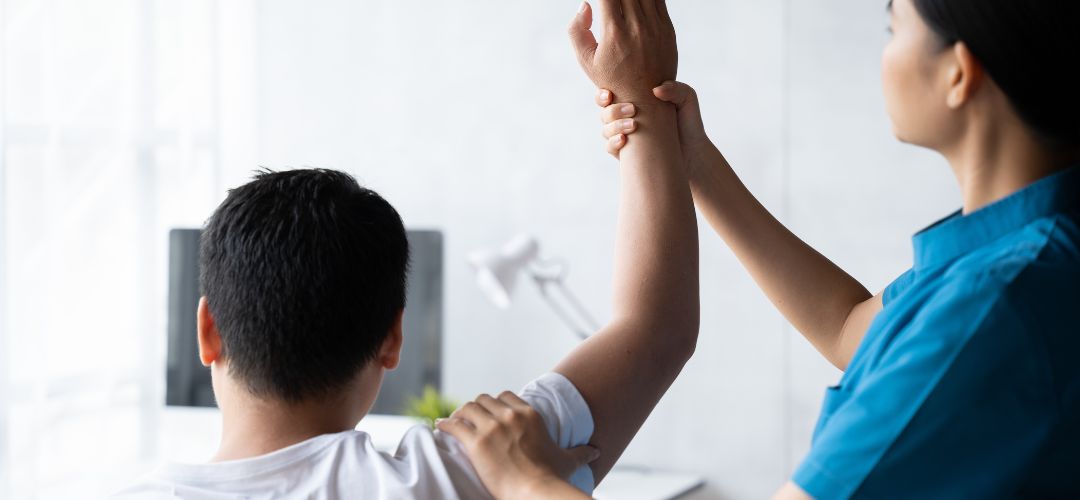
Duchenne Muscular Dystrophy (DMD) is a progressive genetic disorder primarily affecting boys. It is caused by a mutation in the gene responsible for producing a protein called dystrophin, which plays a crucial role in maintaining the structure and function of muscle fibers.
If you or your dear one has been diagnosed with DMD, you might already be aware of the challenges and concerns that come with it. Recent evidence has shown the effectiveness of physical therapy in optimizing mobility and function for individuals living with DMD.
This article will explore the goals of physical therapy in DMD, the benefits of early intervention, different techniques used in treatment, and much more. So, let's see how physical therapy can positively impact DMD patients!
Why Do DMD Patients Experience Muscle Weakness and Loss of Flexibility?
Since individuals with DMD lack DYSTROPHIN protein, their muscles become more susceptible to damage and inflammation, and gradually degenerate. Here are the main causes of muscle weakness in DMD patients:
i. Decreased strength of muscle fibers:
Gradually the muscle fibers in DMD patients are replaced by fatty tissue and connective tissue, resulting in decreased strength and flexibility.
This leads to difficulties with walking, climbing stairs, and even simple tasks like lifting objects or combing hair.
ii. Imbalance in energy production:
The lack of dystrophin also impacts other essential components within muscle cells, including calcium regulation and energy production. These dysfunctions further contribute to muscle weakness and impairment in mobility.
iii. Prolonged immobility:
Prolonged periods of immobility can accelerate the loss of strength and flexibility. Lack of physical activity can lead to disuse atrophy - when muscles waste away from not being used regularly.
Why is Physical Therapy Important in DMD?
Regarding Duchenne Muscular Dystrophy, physical therapy is crucial in optimizing mobility and function for individuals living with this condition.
The goals of physical therapy may vary depending on each patient's specific needs, but there are some common objectives that therapists aim to achieve.
i. Maintain Muscle Strength:
As DMD progresses, muscle weakness becomes more pronounced, leading to difficulties in performing everyday activities.
Physical therapy techniques such as low-impact exercises help keep the muscles active and prevent further deterioration.
ii. Improve Respiratory Function:
A 2022 study published in the American Journal of Respiratory and Critical Care Medicine says that MD affects both skeletal and respiratory muscles, leading to breathing difficulties over time (1).
Physical therapists add breathing exercises and respiratory muscle training into their sessions to help improve lung capacity and overall respiratory function.
iii. Promoting Independence:
Physical therapy aims at enhancing independence through assistive devices and mobility aids.
These tools can provide support and stability, enabling individuals with DMD to navigate their surroundings more easily and confidently engage in daily tasks.
iv. Management of Pain:
Studies have shown that around 80% of patients with DMD experience pain daily for several hours. It may be due to weak muscles and abnormal posture (2). Physical therapists use stretching exercises, manual therapy, and modalities like heat or cold therapy to alleviate pain. These methods help to reduce muscle tension and improve range of motion.
In addition to managing pain, preventing contractures is essential in maintaining mobility.
v. Cardiovascular Health Maintenance:
Recent studies have found that DMD affects the heart adversely, resulting in fatal conditions such as cardiac fibrosis, arrhythmias, and even heart failure (3). Regular aerobic exercise helps strengthen the heart muscle while improving blood circulation.
What are the Benefits of Early Interventions in DMD?
Early intervention is crucial in optimizing mobility and function for individuals with DMD.
Physical therapy for DMD can help in various ways, like:
- Keeping the muscles flexible by doing regular stretches every day.
- Helps you adjust and find ways to do things even if the patient can't do them the same way.
- Checking how well the patient's body is working overtime using normal tests.
- Taking care of the patient's skin if it gets hurt or irritated.
- Stopping or dealing with any hurting feelings.
- Suggesting exercises and ensuring safe activities that aren't too hard.
- Recommending tools to help the person move around, like special chairs or equipment.
- Helping the affected individuals get better after they get hurt or break something.
Different Physical Therapy Techniques Used for DMD Patients
Various techniques can be used to optimize mobility and function in DMD. These techniques aim to address each individual's specific needs, considering their unique challenges and limitations.
a. Stretching Exercises:
Stretching is like exercise for the joints. It's good to do it every day and as per the instructions of your physical.
Children with DMD should start stretching their shoulders, elbow, wrist, ankle, knees, and hips when they are young and keep doing it until they are older.
Stretching helps improve flexibility and prevent muscle contractures, common problems for individuals with DMD. It can target specific muscles or muscle groups that tend to become tight or shortened due to weakness.
b. Resistance Training:
It involves using weights or other forms of resistance to strengthen muscles. This can help slow the progression of muscle weakness and improve overall strength.
Resistance training should be tailored to the individual's abilities and gradually increase.
c. Balance and Coordination Exercises:
Balance and coordination exercises are also important in DMD physical therapy. These exercises focus on improving stability and control, which can help individuals maintain better posture and reduce the risk of falls.
d. Aquatic Therapy:
The buoyancy provided by water allows for low-impact exercise while reducing joint stress. Water-based activities can increase the range of motion, build strength, and enhance cardiovascular fitness.
Swimming is a good choice because it's easier on your muscles in the water. Don't tire yourself out too much, and take breaks when needed. Talk to your physical therapist and rehab team about safe exercises.
Assistive Devices And Mobility Aids To Improve Independence
Assistive devices and mobility aids are crucial in improving independence for individuals with DMD. These innovative tools are designed to help compensate for muscle weakness and provide support during daily activities.
- Wheelchair:
One common assistive device used by individuals with DMD is the wheelchair. A properly fitted wheelchair can enhance mobility, allowing individuals to move around independently and participate in various activities.
Power wheelchairs offer even greater freedom of movement, as they are controlled by joystick or switch mechanisms.
- Standing frame:
This device allows individuals to stand upright, which not only improves circulation but also helps prevent bone density loss.
Standing frames can be adjusted to different angles, providing flexibility depending on each individual's needs.
- Writing aids:
For those who experience difficulties with hand function, adaptive equipment such as modified utensils and writing aids can make everyday tasks more manageable.
These tools enable individuals to maintain independence in eating, writing, or performing other fine motor skills.
- Orthotic braces:
The specialized orthotic braces provide support for weak joints and muscles. These are made of plastic and are custom-made to fit each person. They can be put on different body parts, like the ankles, knees, wrists, and hands.
In DMD, the calf muscle becomes tight and pulls on the Achilles tendon, tightening the ankles. To prevent this, people with DMD can wear special braces at night, sometimes called "night splints" or "moon boots."
These braces stretch the ankles and feet while the person sleeps. Starting to wear these braces around diagnosis is a good idea to help get used to them.
Conclusion
Physical therapy is crucial in optimizing mobility and function for individuals with Duchenne Muscular Dystrophy. Physical therapists can help patients maintain muscle strength, flexibility, and independence through early intervention and personalized exercise programs.
While there is no absolute cure for DMD, receiving proper education on optimizing mobility through physical therapy empowers those affected by the condition to live their lives more fully. By creating inclusive environments that promote engagement in various forms of exercise tailored to individual abilities – whether it's adaptive sports or modified workouts – we can empower individuals with DMD to lead fulfilling and enriching lives.
References
-
Finder, J. D., Birnkrant, D., Carl, J., Farber, H. J., Gozal, D., Iannaccone, S. T., Kovesi, T., Kravitz, R. M., Panitch, H., Schramm, C., Schroth, M., Sharma, G., Sievers, L., Silvestri, J. M., Sterni, L., & American Thoracic Society (2004). Respiratory care of the patient with Duchenne muscular dystrophy: ATS consensus statement. American journal of respiratory and critical care medicine, 170(4), 456–465. https://doi.org/10.1164/rccm.200307-885ST
-
Zebracki, K., & Drotar, D. (2008). Pain and activity limitations in children with Duchenne or Becker muscular dystrophy. Developmental medicine and child neurology, 50(7), 546–552. https://doi.org/10.1111/j.1469-8749.2008.03005.x
-
Schultz, T. I., Raucci, F. J., Jr, & Salloum, F. N. (2022). Cardiovascular Disease in Duchenne Muscular Dystrophy: Overview and Insight Into Novel Therapeutic Targets. JACC. Basic to translational science, 7(6), 608–625. https://doi.org/10.1016/j.jacbts.2021.11.004